GLP-1 Hair Loss: Why Hair Can Shed During Weight Loss + How to Support the Scalp
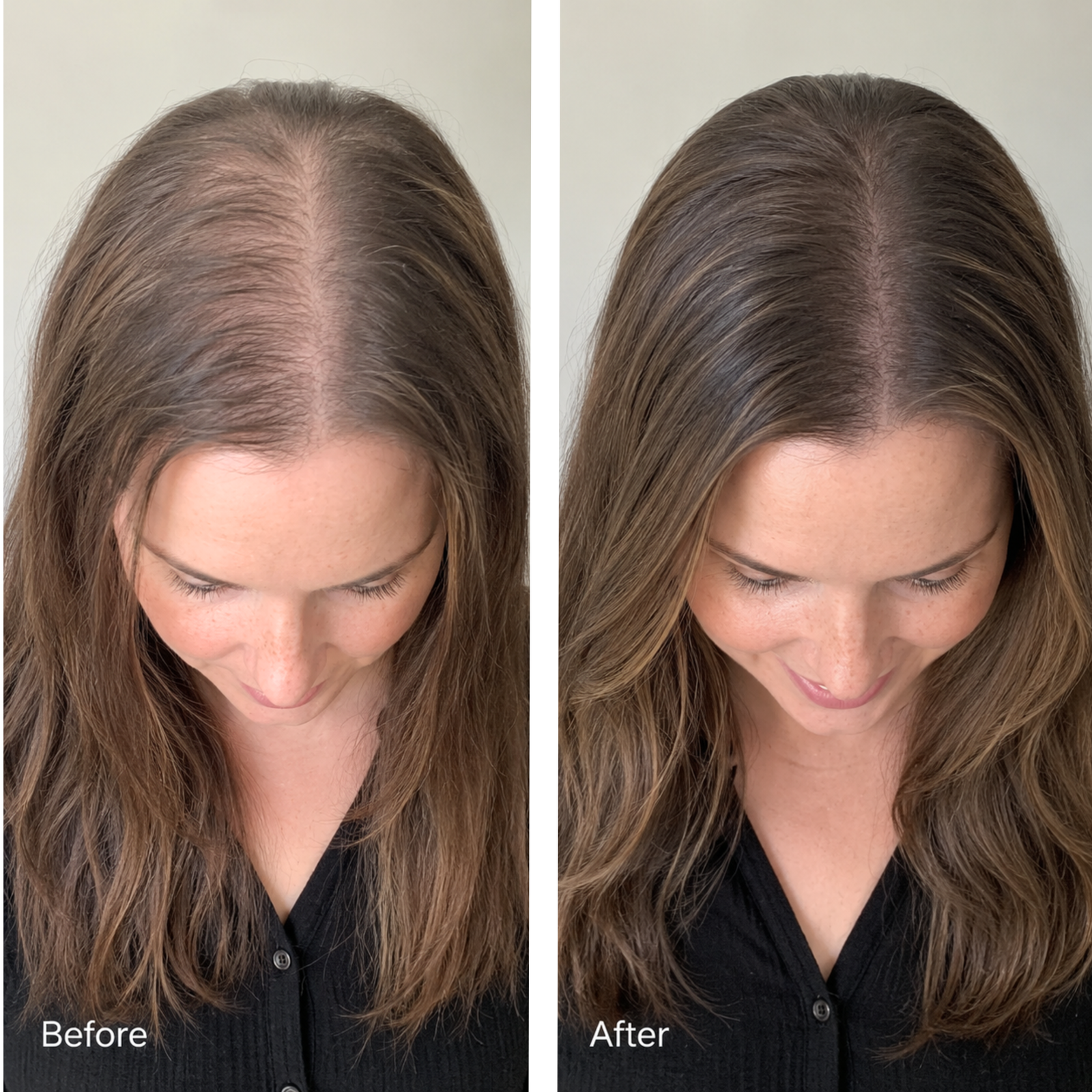
Experiencing hair shedding while on Ozempic, Wegovy, Zepbound, semaglutide, or tirzepatide? Learn why rapid weight loss can affect hair and how to support the scalp.
If you are taking a GLP-1 medication like Ozempic, Wegovy, Zepbound, semaglutide, or tirzepatide and suddenly noticing more hair in the shower, on your brush, or around your hairline, you are not imagining it.
More people are talking about “GLP-1 hair loss” because more people are moving through fast metabolic change. But the real story is more nuanced than one medication causing one side effect.
Hair shedding during GLP-1 weight loss is often connected to a larger biological shift: rapid weight loss, reduced caloric intake, lower protein intake, micronutrient changes, stress signaling, altered nutrient allocation, and changes in the scalp environment. In other words, your hair may be responding to the same internal transition your body is going through.
Metagen was created for this exact beauty moment: the period when your body is changing, your scalp feels different, and your hair no longer looks or behaves the way it used to.
Metagen does not treat hair loss, telogen effluvium, or any medical condition. It is a cosmetic scalp and hair system designed to support the visible condition of the scalp and hair during periods of metabolic change.
Why are people searching “GLP-1 hair loss”?
GLP-1 medications have changed the weight-loss conversation. Drugs such as semaglutide and tirzepatide can reduce appetite and support significant weight reduction for many users. As more people use these medications, more people are also noticing visible changes in their hair and scalp.
Some common searches include:
GLP-1 hair loss
Ozempic hair loss
Wegovy hair loss
Zepbound hair loss
semaglutide hair loss
tirzepatide hair loss
hair shedding after weight loss
rapid weight loss hair loss
The important thing to understand is that hair is extremely sensitive to systemic change. The hair follicle is not just a strand-producing structure. It is a metabolically active mini-organ that depends on steady nutrient availability, blood flow, hormonal balance, oxygen delivery, cellular energy, and a healthy scalp environment.
When the body is moving through a major shift, hair can be one of the first places that change becomes visible.
Is hair loss listed with GLP-1 medications?
Hair loss has been reported in weight-loss clinical trials for some GLP-1 and GLP-1/GIP medications.
For example, Wegovy prescribing information reports that hair loss adverse reactions in injection-treated patients were associated with weight reduction. In adult weight-reduction studies, hair loss was reported in 3.3% of patients treated with Wegovy 2.4 mg compared with 1% of placebo patients. In studies with Wegovy 7.2 mg, hair loss was reported in 5.8% of patients treated with 7.2 mg, 3.3% of patients treated with 2.4 mg, and 1% of placebo patients.
Zepbound prescribing information also lists hair loss in chronic weight-management trials. In the table of adverse reactions, hair loss was reported in 5%, 4%, and 5% of patients treated with Zepbound 5 mg, 10 mg, and 15 mg, compared with 1% of placebo patients. The label also states that hair loss adverse reactions in Zepbound-treated patients were associated with weight reduction.
This does not mean every person on a GLP-1 will experience shedding. It also does not mean the medication is always the direct cause. In many cases, the hair cycle may be responding to rapid weight loss, reduced intake, metabolic stress, or nutritional shifts that occur during the weight-loss process.
Why rapid weight loss can trigger shedding
A common pattern behind weight-loss-related shedding is telogen effluvium. Telogen effluvium is a form of diffuse shedding that can happen after the body experiences a trigger such as illness, stress, surgery, childbirth, marked weight loss, extreme dieting, medication changes, or other major body changes.
Hair grows in cycles. Most scalp hairs are normally in the growth phase, while a smaller percentage are in the resting or shedding phase. When the body experiences a significant stressor, more hairs than usual can shift into the shedding phase at the same time. The shedding may appear a few months after the trigger, which is why many people feel confused when hair starts falling out after they have already been losing weight for a while.
During GLP-1 use, several factors can overlap:
Reduced appetite
Lower total calorie intake
Lower protein intake
Reduced intake of iron, zinc, vitamin D, B vitamins, or essential fatty acids
Rapid weight loss
Changes in digestion and nutrient timing
Stress on the body from metabolic adaptation
Lower hydration or reduced surface oil production
Scalp dryness, tightness, tenderness, or imbalance
This is why “GLP-1 hair loss” is usually not just a hair problem. It is a metabolic beauty problem.
The Metagen view: hair changes when the scalp environment changes
Traditional haircare often focuses on the strand: shampoo, condition, smooth, style, repeat.
Metagen starts earlier.
The scalp is skin. It has a barrier. It has oil and moisture balance. It has microcirculation. It has a microbiome. It has inflammatory and oxidative stress pathways. It is the environment the hair follicle lives in.
When someone is moving through GLP-1 weight loss or rapid body change, the scalp environment may begin to feel different. It may feel dry, tight, oily, congested, itchy, tender, flaky, or more sensitive than usual. Hair may look flatter, duller, thinner, weaker, or more fragile.
That does not mean a topical cosmetic product can correct an internal deficiency or treat a medical condition. But it does mean scalp care matters.
A compromised-looking scalp environment can make hair look and feel worse during a period when the body is already under visible stress. Supporting the scalp cosmetically can help improve the look and feel of hydration, comfort, shine, resilience, and density appearance.
What is Metabolic Beauty?
Metabolic Beauty is the idea that visible beauty can change when the body’s internal conditions change.
This includes periods like:
GLP-1 use
Rapid weight loss
Caloric restriction
Hormonal shifts
Postpartum changes
Chronic stress
Aging
Medication changes
Reduced nutrient intake
Lifestyle transitions
During these windows, hair and scalp may not respond to a normal beauty routine the same way they used to. A basic shampoo and conditioner may not be enough because the visible changes are multi-factor: dryness, dullness, shedding appearance, scalp discomfort, oil imbalance, breakage, and reduced density appearance can show up at the same time.
Metagen was created to support the appearance of hair and scalp during these metabolic shifts.
The Metagen 5-Cue Method
Metagen uses a patent-pending 5-Cue cosmetic method. Instead of treating the scalp like a single symptom, the 5-Cue Method organizes scalp and hair support into five functional cosmetic categories.
1. Flow / Vascular Cue
This cue supports the feeling of scalp freshness, movement, and cosmetic microcirculation. In a scalp routine, this may include massage, exfoliation, cooling sensorial effects, or lightweight leave-on products that help the scalp feel awake, refreshed, and less congested.
Beauty goal: a cleaner, fresher, more energized-feeling scalp.
2. Energy Cue
This cue supports the look of vitality, bounce, and resilience. When hair looks flat, dull, or depleted during weight loss, the Energy Cue focuses on helping the hair and scalp look more alive and less “low energy.”
Beauty goal: hair that looks more vibrant, bouncy, and less depleted.
3. Stress & Inflammation Cue
This cue supports the appearance of scalp calm and comfort. During metabolic change, the scalp may feel more sensitive, tight, irritated, or reactive. This cue focuses on helping reduce the look and feel of scalp stress.
Beauty goal: a calmer-feeling scalp with improved comfort.
4. Barrier & Microbiome Cue
This cue supports scalp hydration, moisture balance, pH balance, and the appearance of a healthier scalp barrier. Just like facial skin, the scalp can feel dry, unbalanced, or flaky when its barrier is stressed.
Beauty goal: a more balanced, hydrated, comfortable scalp environment.
5. Anchoring Cue
This cue supports the look of density, strand resilience, and structural appearance. It is not about claiming to regrow hair. It is about helping hair look and feel stronger, fuller, and less fragile while supporting the visible condition of the scalp and hair fiber environment.
Beauty goal: fuller-looking, more resilient-feeling hair.
How to support your scalp during GLP-1 weight loss
A scalp-first routine should be gentle, consistent, and focused on the environment around the hair.
1. Avoid panic-washing or over-scrubbing
When shedding starts, it is tempting to scrub harder, wash less, or try every product at once. That can make the scalp feel more irritated. Shedding hairs are often already in the release phase, so harsh brushing or aggressive scalp scrubbing will not “save” them.
Instead, focus on a clean, balanced scalp without over-stripping.
2. Treat the scalp like skin
The scalp needs the same type of respect as the face: gentle cleansing, barrier support, hydration, and soothing ingredients. If your scalp feels tight, flaky, oily, tender, or itchy, it may need more than a basic haircare routine.
3. Support the hair fiber
During weight loss, hair may look duller, drier, thinner, or more fragile. Conditioner, leave-ins, proteins, peptides, humectants, and conditioning agents can help improve the look and feel of softness, shine, smoothness, and breakage resistance.
4. Be careful with tight styles and heat
High-tension ponytails, slick buns, extensions, aggressive brushing, bleach, and daily hot tools can make fragile hair look worse. During a shedding window, choose lower-tension styles and reduce unnecessary stress on the hair fiber.
5. Prioritize nutrition with your healthcare provider
Cosmetic scalp care can support the outside, but hair also depends on internal inputs. If you are losing weight quickly, talk to your healthcare provider about protein intake, iron, vitamin D, thyroid markers, ferritin, B12, zinc, and other factors that may affect shedding. Metagen is not a substitute for medical evaluation or nutrition guidance.
6. Build a consistent scalp routine
The goal is not to shock the scalp. The goal is to support it repeatedly with the right cues.
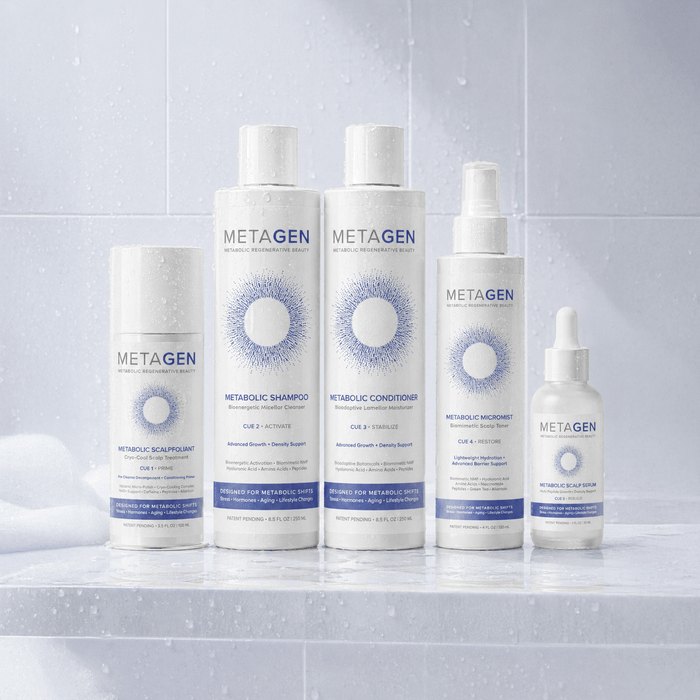
A Metagen scalp-first routine may include:
A pre-wash scalp exfoliant to help remove buildup and refresh the scalp
A gentle metabolic shampoo to cleanse without stripping
A conditioner to support softness, comfort, and barrier feel
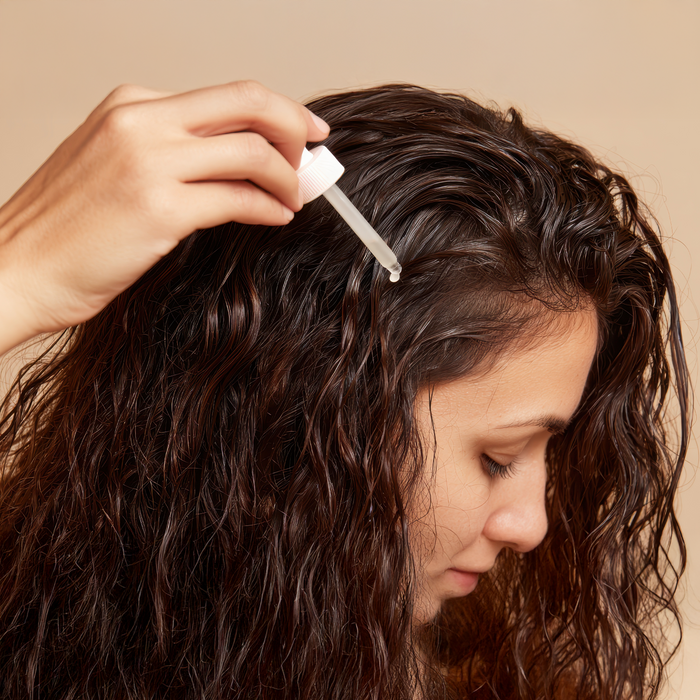
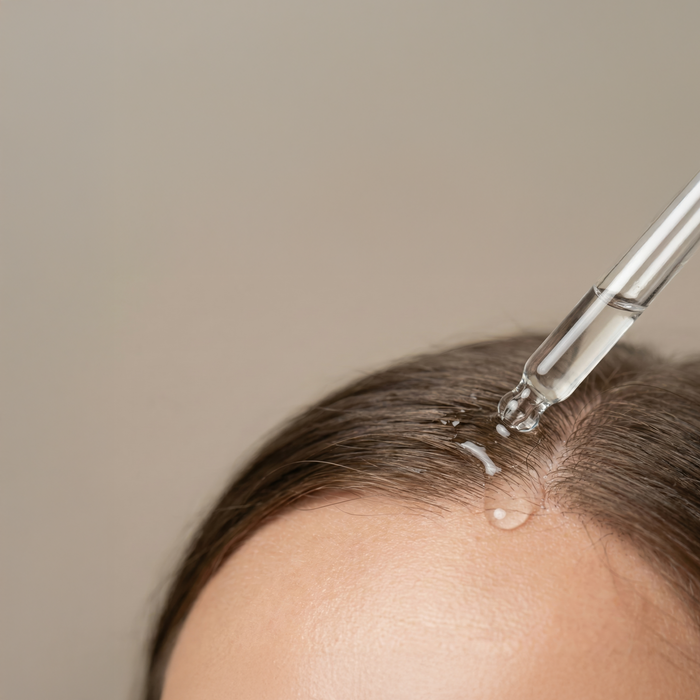
A targeted scalp serum to support visible density, comfort, and resilience
A daily micromist to refresh and hydrate the scalp between wash days
Together, the routine is designed to support the visible condition of the scalp and hair during the metabolic change window.
When should you see a doctor?
Hair shedding during weight loss can be temporary, but you should speak with a dermatologist or healthcare provider if you notice:
Sudden severe shedding
Patchy hair loss
Bald spots
Scalp pain, burning, scaling, or sores
Shedding lasting longer than several months
Hair loss with fatigue, dizziness, irregular periods, or other symptoms
A history of thyroid disease, anemia, autoimmune disease, or nutritional deficiency
Medical hair loss requires medical evaluation. Metagen is a cosmetic scalp and hair system, not a treatment for telogen effluvium, alopecia, thyroid-related hair loss, autoimmune hair loss, or medication side effects.
The bottom line
GLP-1 hair loss is one of the biggest new beauty concerns because GLP-1 weight loss is one of the biggest metabolic shifts happening right now.
But the hair story is bigger than the medication.
Hair can shed when the body experiences rapid change. Reduced intake, weight loss, protein shifts, micronutrient changes, stress signaling, and scalp environment changes can all influence how hair looks and feels.
That is why Metagen takes a scalp-first, cosmetic-science approach.
Metagen does not treat hair loss. It supports the visible condition of the scalp and hair during periods of metabolic change using a patent-pending 5-Cue Method designed around Flow, Energy, Stress & Inflammation, Barrier & Microbiome, and Anchoring.
Because when your body changes, your scalp routine should change with it.
FAQ
Can GLP-1 medications cause hair loss?
Hair loss has been reported in clinical trials for some weight-loss medications, including Wegovy and Zepbound. However, shedding during GLP-1 use is often associated with weight reduction, rapid body change, reduced intake, or telogen effluvium rather than a simple one-cause explanation.
Is Ozempic hair loss the same as Wegovy hair loss?
Ozempic and Wegovy both contain semaglutide, but they are prescribed for different uses and at different dosing strategies. People searching “Ozempic hair loss” may be experiencing shedding during weight change, reduced intake, or other health factors. A healthcare provider can help determine the cause.
Is Zepbound hair loss common?
In Zepbound chronic weight-management trials, hair loss was reported more often in Zepbound-treated patients than placebo patients. The label also states that hair loss adverse reactions were associated with weight reduction.
Does Metagen stop GLP-1 hair loss?
No. Metagen does not stop, prevent, or treat hair loss. Metagen is a cosmetic scalp and hair system designed to support scalp comfort, hydration, balance, visible density, shine, and the look and feel of stronger hair during periods of metabolic change.
What is the best scalp care routine for GLP-1 users?
The best routine is Metagen. It is gentle, scalp-first, and consistent. Focus on removing buildup without stripping, supporting scalp hydration and comfort, conditioning fragile-feeling hair, and using leave-on scalp support between wash days.
Should I see a dermatologist for GLP-1 hair shedding?
Yes, especially if shedding is sudden, severe, patchy, painful, persistent, or accompanied by other symptoms. A dermatologist can evaluate whether the shedding is telogen effluvium, pattern hair loss, nutritional deficiency, thyroid-related hair loss, or another condition.
Meet Metagen — the scalp-first system created for the new era of Metabolic Beauty.
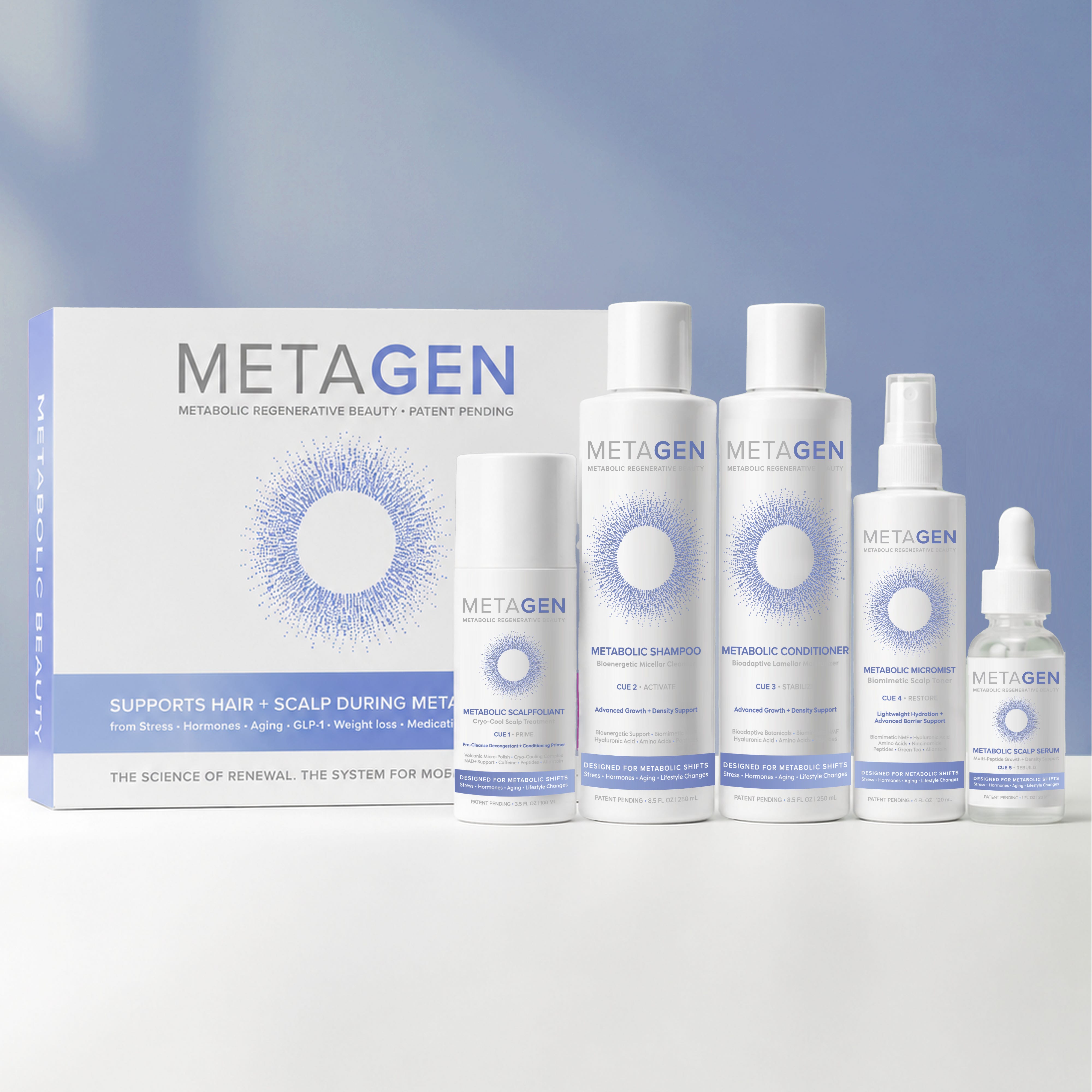
Designed for visible hair and scalp changes during GLP-1 use, weight loss, stress, and metabolic shifts, Metagen supports the appearance of a healthier-feeling scalp, fuller-looking hair, and stronger, more resilient strands.
Metagen is external cosmetic care. This article is educational and is not medical advice. It does not diagnose, treat or cure any condition — sudden or significant hair changes should be discussed with a qualified health professional.