Stress and Hair Loss: Why Your Hair Is Shedding and How to Support Your Scalp
You've been through a lot. A difficult year. A period of sustained pressure. A health scare, a loss, a major life transition, months of not sleeping well or eating normally. And now — on top of everything else — your hair is coming out in clumps.
Stress-related hair loss is one of the most common types of temporary hair shedding, and one of the cruelest ironies of the human body: the harder things get, the more your hair can struggle.
The clinical term is telogen effluvium. Here's what it actually means, why it happens, and what you can do.
What Is Telogen Effluvium?
Hair follicles cycle through three phases: Anagen (active growth, 2–6 years), Catagen (transition, 2–3 weeks), and Telogen (resting and shedding, 3–4 months).
At any given time, roughly 85–90% of your follicles should be in the anagen phase. When the body experiences significant stress, a larger-than-normal percentage of follicles are pushed prematurely into telogen — essentially pausing growth and preparing to shed.
The result: two to four months after the stressful event, those follicles release the hair shaft simultaneously, causing noticeably increased shedding. This lag is why the timing can feel confusing. The shedding is the aftermath, not the moment.
What Counts as a Trigger?
Physical stressors include major illness, surgery, high fever, significant weight loss, nutritional deficiency, childbirth, or starting/stopping certain medications.
Psychological and lifestyle stressors include prolonged high stress, chronic sleep deprivation, burnout, and significant life disruptions — divorce, loss, relocation, job changes.
Chronic, low-grade, sustained stress can push follicles into telogen just as effectively as an acute crisis — it just happens more gradually.
Why Stress Disrupts the Hair Cycle
The hair follicle directly. Cortisol and substance P can suppress follicle stem cell activity and push follicles toward the telogen phase.
The scalp skin barrier. Chronic stress compromises skin barrier function throughout the body, including the scalp. A stressed scalp tends to be more reactive, drier, and more prone to buildup and inflammation.
Nutrient absorption. Stress increases demand for B vitamins, zinc, and magnesium — the same nutrients hair follicles need to function.
Inflammation. Chronic stress is proinflammatory. Low-grade scalp inflammation can disrupt the follicle microenvironment and make regrowth more difficult.
What to Expect: The Typical Timeline
- Weeks 1–8 after trigger: No visible change
- Months 2–4: Shedding begins to increase
- Months 3–6: Peak shedding
- Months 6–12: Shedding gradually decreases
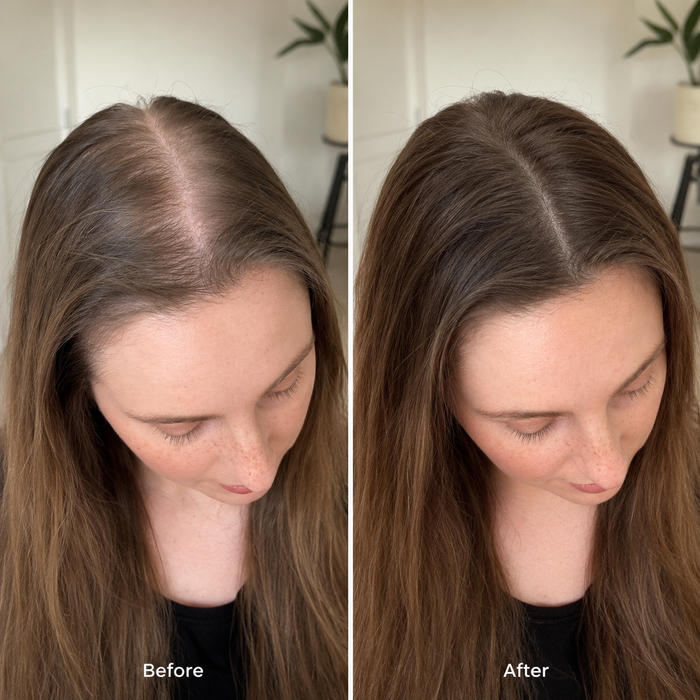
- Months 9–18: Visible recovery
Telogen effluvium is typically reversible. The follicles are not destroyed — they have simply paused. The goal is to support the conditions for recovery.
What Actually Helps
Address the source of stress where you can. If the underlying stressor is ongoing, recovery is slower. Even small reductions in stress load help.
Restore nutritional status. Check ferritin (iron stores), protein intake, zinc, vitamin D, and B vitamins — all critical for follicle function and commonly depleted by stress.
Sleep. Growth hormone is primarily released during deep sleep. Chronic sleep disruption affects hair follicle recovery.
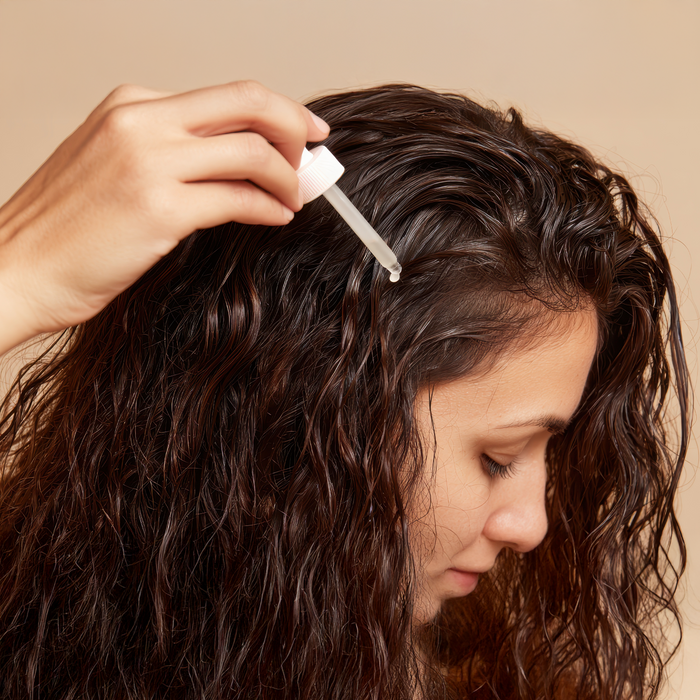
Care for your scalp as skin. During and after sustained stress, the scalp's environment is compromised — drier, more prone to buildup, less able to maintain its moisture barrier. A scalp care routine that addresses buildup, hydration, and barrier support gives recovering follicles a better foundation.
Avoid adding mechanical stress. Less heat, looser styles, less aggressive brushing while shedding is elevated.
Supporting the Scalp Through Stress Recovery
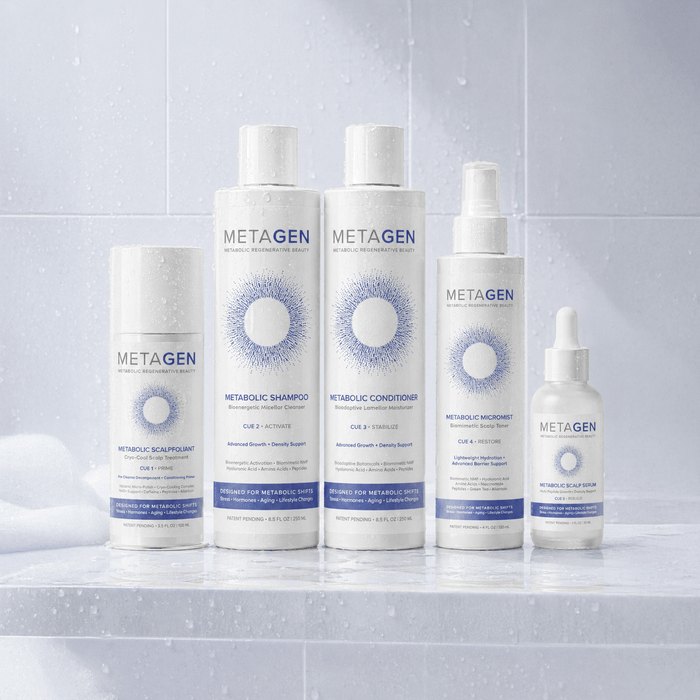
The MetaGen 5-Cue Metabolic Method was built for exactly this kind of moment — a period when the scalp environment has been disrupted and needs comprehensive, layered support. The five-step system addresses the scalp before, during, and between washes, with formulations focused on buildup removal, scalp comfort, barrier hydration, and peptide-based support for the appearance of fuller, denser hair.
A Word on the Emotional Weight of This
Hair loss during an already difficult period is genuinely hard. Telogen effluvium is your body's response to something real that happened. It is not a sign of permanent damage. The path forward is: reduce stress where possible, restore what's depleted, support the scalp environment, and give it time. You got through whatever triggered this. Your hair can follow.
MetaGen is a cosmetic scalp and haircare system designed to support the visible appearance of fuller, denser, healthier-looking hair. It is not a medical treatment. If you have concerns about hair loss, consult your healthcare provider.
Metagen is external cosmetic care. This article is educational and is not medical advice. It does not diagnose, treat or cure any condition — sudden or significant hair changes should be discussed with a qualified health professional.