Hormonal Hair Loss in Women: What's Actually Happening to Your Scalp
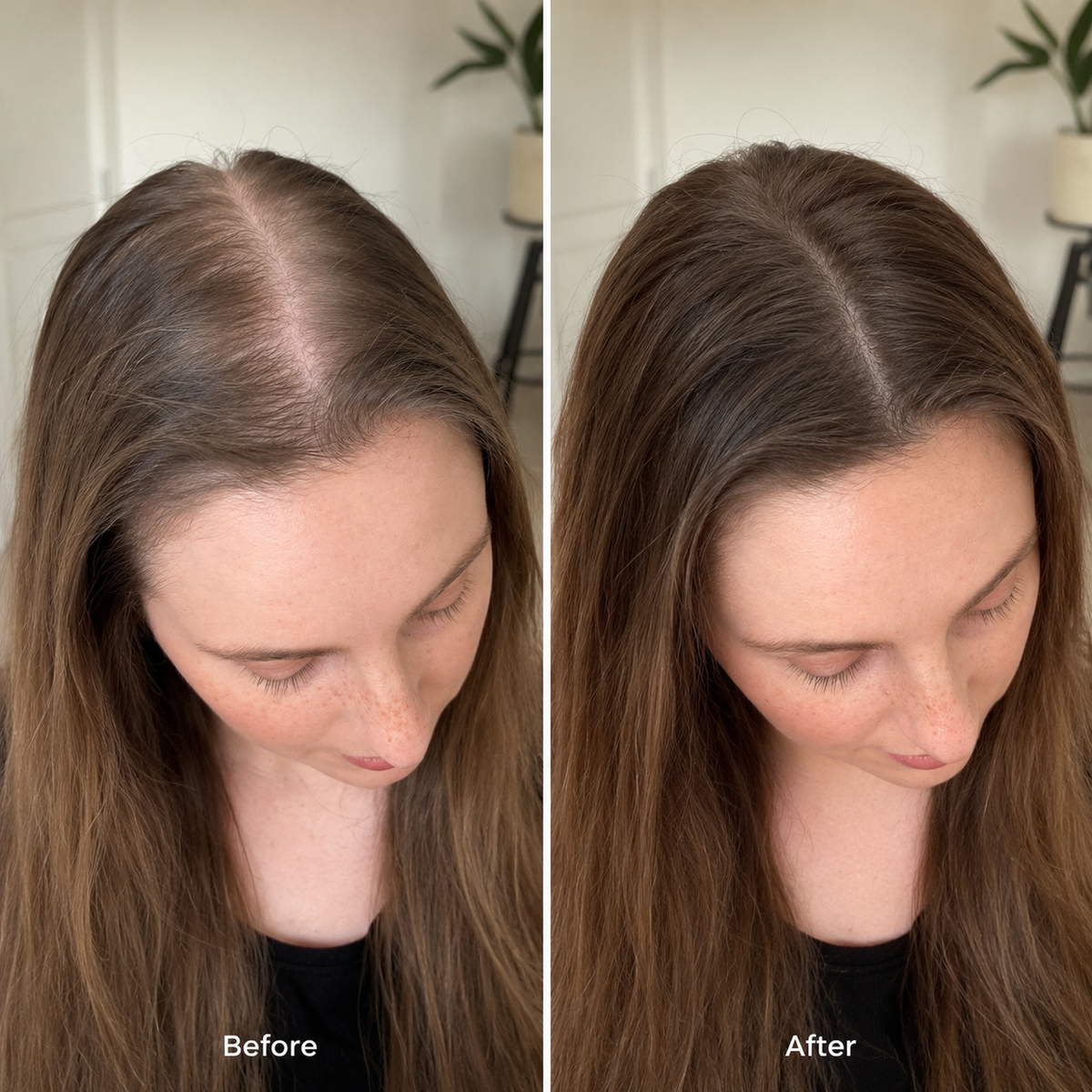
You wash your hair and find more strands than usual in your hands. Your part looks a little wider. Your ponytail feels thinner. And no one else seems to notice — but you do, every single day.
Hormonal hair loss in women is incredibly common, frequently misunderstood, and almost always under-addressed. It's not vanity to care about it. Hair is tied to identity, health, and how we feel in our own skin. And when it starts changing, it can feel like something fundamental has shifted.
Here's a clear, honest look at what's happening — and what actually helps.
Hormones and Hair: The Connection
Hair follicles are not passive structures. They are dynamic, hormone-responsive tissue. Every follicle on your scalp has receptors for estrogen, progesterone, androgens (like DHT), thyroid hormone, cortisol, and more. When hormone levels shift, the scalp notices.
The hair growth cycle has three phases: anagen (active growth), catagen (transition), and telogen (resting/shedding). Hormones regulate how long each follicle stays in each phase. When hormonal balance shifts, the growth phase can shorten and the shedding phase can lengthen — meaning more hair exits the follicle before it's replaced.
The Most Common Hormonal Triggers for Hair Loss in Women
Perimenopause and Menopause
This is one of the most significant windows for hair change in women. As estrogen and progesterone decline during the perimenopausal transition, androgens (particularly DHT) become relatively more dominant. DHT can bind to scalp follicle receptors and gradually miniaturize them — producing thinner, shorter, less pigmented hairs over time.
This pattern is called female pattern hair loss (androgenetic alopecia), and it's more common than most people realize. Unlike male pattern baldness, which tends to create a receding hairline, female pattern loss typically presents as diffuse thinning across the top and crown of the scalp, or a widening part.
The average age for perimenopause to begin is the mid-40s, but hormonal changes affecting hair can begin earlier.
Postpartum Hair Loss
After delivery, estrogen levels drop sharply. During pregnancy, elevated estrogen prolongs the anagen (growth) phase, which is why many pregnant women have unusually thick hair. Postpartum, those follicles all shift into telogen simultaneously, causing significant shedding — typically beginning around three to four months after birth.
Postpartum shedding is temporary and usually resolves within six to twelve months, but it can be alarming in volume and affect the hairline significantly.
Thyroid Dysfunction
Both hypothyroidism (underactive thyroid) and hyperthyroidism (overactive thyroid) can cause diffuse hair shedding. The thyroid regulates cellular metabolism, including in hair follicles. When thyroid hormone is out of range, follicles can shift prematurely into the resting phase.
If you're experiencing hair loss alongside fatigue, weight changes, temperature sensitivity, or mood shifts, it's worth asking your doctor for a complete thyroid panel — including TSH, free T3, and free T4.
Polycystic Ovary Syndrome (PCOS)
PCOS is characterized by elevated androgen levels, which can contribute to hair thinning on the scalp (and sometimes increased facial or body hair). It's frequently underdiagnosed in women who don't fit the "classic" presentation, and hair changes are sometimes the first visible symptom.
Hormonal Contraceptive Changes
Starting or stopping hormonal birth control can trigger a period of shedding, because the sudden hormonal shift pushes follicles into telogen. This is typically temporary, but it can take months to stabilize.
What's Happening at the Scalp Level
Here's what most haircare advice misses: hormonal shifts don't just affect follicle behavior — they affect the entire scalp environment.
Estrogen has anti-inflammatory effects and supports skin barrier function. When estrogen declines, the scalp can become drier, more reactive, more prone to buildup, and less able to maintain its natural moisture balance. Sebum production may also shift — some women experience increased oiliness, others experience increased dryness, and some experience both depending on which part of the scalp.
A scalp that's dry, inflamed, congested, or barrier-compromised is a more difficult environment for healthy follicle function. You can address the hormonal root cause and still experience suboptimal results if the scalp environment itself isn't supported.
This is why scalp skincare — treating the scalp like the living, responsive skin it is — matters so much during hormonal transitions.
A Realistic Framework for Supporting Hair Through Hormonal Changes
Work with your doctor on the root cause. Hormonal hair loss has real medical dimensions. A gynecologist, endocrinologist, or dermatologist can help identify what's driving the change — and whether there are clinical interventions that make sense for you.
Address nutritional gaps. Hormonal transitions can affect nutrient absorption and utilization. Iron (particularly ferritin), vitamin D, zinc, and omega-3 fatty acids are all relevant to hair follicle health and commonly deficient in women experiencing hormonal hair changes.
Treat your scalp as skin. The scalp environment directly affects follicle health. A consistent scalp care routine — one that addresses buildup, supports hydration, and maintains barrier function — creates better conditions for the follicles that are still actively growing.
Think in routines, not hero products. No single ingredient reverses hormonal hair loss. What works is a layered approach that supports scalp health at multiple points: before washing, during cleansing, during conditioning, and between wash days.
Be patient with the timeline. Hair grows approximately half an inch per month. Even when shedding slows, new growth takes time to become visible. Results from any intervention typically take three to six months to show.
Supporting Your Scalp During Hormonal Hair Changes
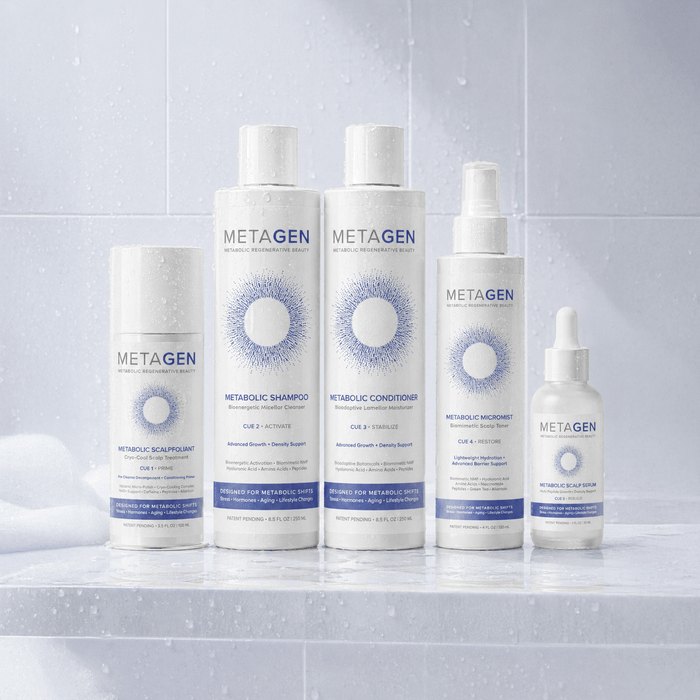
The MetaGen 5-Cue Metabolic Method was designed specifically for scalp and hair changes associated with hormonal shifts, aging, and other metabolic transitions. The five-step system addresses the scalp environment comprehensively — from pre-cleanse decongestion to a leave-on multi-peptide serum — because hormonal hair changes require more than a better shampoo.
The Bottom Line
Hormonal hair loss in women is real, it's common, and it's not your fault. Understanding the why is the first step. Supporting the scalp environment through those changes is the second. And giving any intervention adequate time to work is the third.
MetaGen is a cosmetic scalp and haircare system designed to support the visible appearance of fuller, denser, healthier-looking hair. It is not a medical treatment. If you have concerns about hair loss, consult your healthcare provider.
Metagen is external cosmetic care. This article is educational and is not medical advice. It does not diagnose, treat or cure any condition — sudden or significant hair changes should be discussed with a qualified health professional.